


Table Of Contents:-
- Introduction
- Understanding the Advantage of Being Small
- Focus on a Specific Target Audience
- Build a Strong Website
- Invest in Local SEO
- Create Helpful Content
- Compete Through Expertise, Not Size
- Use Social Media Strategically
- Build Trust Through Reviews
- Use Google Ads Carefully
- Build an Email List
- Highlight Your Personal Service
- Showcase Customer Success Stories
- Build a Strong Brand
- Be Visible Across Multiple Channels
- Monitor Performance Regularly
- Use AI and Automation Wisely
- Work With the Right Marketing Partner
- Consistency Matters More Than Size
- Final Thoughts
Running a small business can sometimes feel like competing against organisations with unlimited resources. Large companies often have bigger marketing budgets, larger teams, established brand recognition, and the ability to spend heavily on advertising.
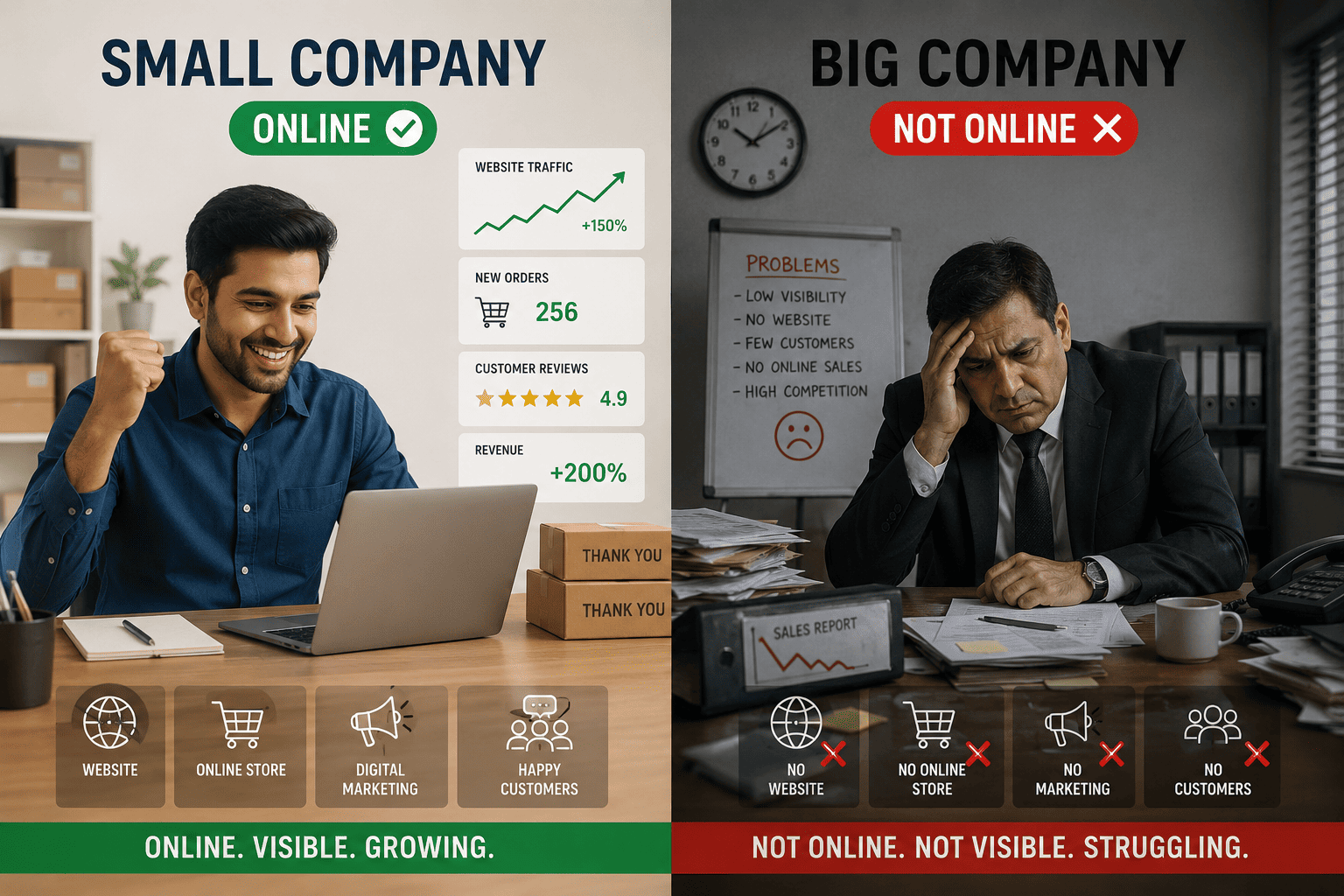
However, the internet has changed the way businesses compete. Today, a local business in Gaya can reach customers across India and even internationally. A small company with the right strategy can often outperform larger competitors in areas where customers value trust, expertise, personal service, and authentic communication.
The question is no longer whether small businesses can compete online. The real question is how they can do it effectively.
In this article, we’ll explore practical ways small businesses can compete with larger companies online and build sustainable growth.
Understanding The Advantage Of Being Small
Many business owners focus on what they lack compared to larger companies. They think about smaller budgets, fewer employees, and limited resources.
But being small comes with advantages.
Small businesses can:
- Make decisions quickly
- Adapt to market changes faster
- Offer personal customer service
- Build stronger relationships
- Create authentic content
- Focus on specific customer groups
Large companies often struggle to move quickly because of complex processes and multiple layers of approval. Small businesses can react immediately when they identify an opportunity.
This flexibility is often one of the biggest competitive advantages online.
Focus On A Specific Target Audience
One of the biggest mistakes small businesses make is trying to serve everyone.
Large companies often target broad markets because they have the resources to do so. Small businesses achieve better results when they focus on a specific audience.
For example, instead of targeting “business owners”, you could target:
- Local retailers
- Construction companies
- Real estate agencies
- Healthcare providers
- Restaurants
- Professional service firms
When you understand a specific audience deeply, your marketing becomes more relevant.
Customers are more likely to trust a business that understands their challenges than one trying to appeal to everyone.
Build A Strong Website
Your website is often the first impression potential customers have of your business.
Many small businesses lose opportunities because their website is outdated, slow, difficult to navigate, or unclear.
A good business website should:
- Load quickly
- Work properly on mobile devices
- Clearly explain services
- Display contact information
- Include customer reviews
- Provide helpful information
- Make it easy to take action
Visitors should understand what you do within a few seconds of landing on your website.
If customers become confused, they often leave and visit a competitor instead.
Invest In Local SEO
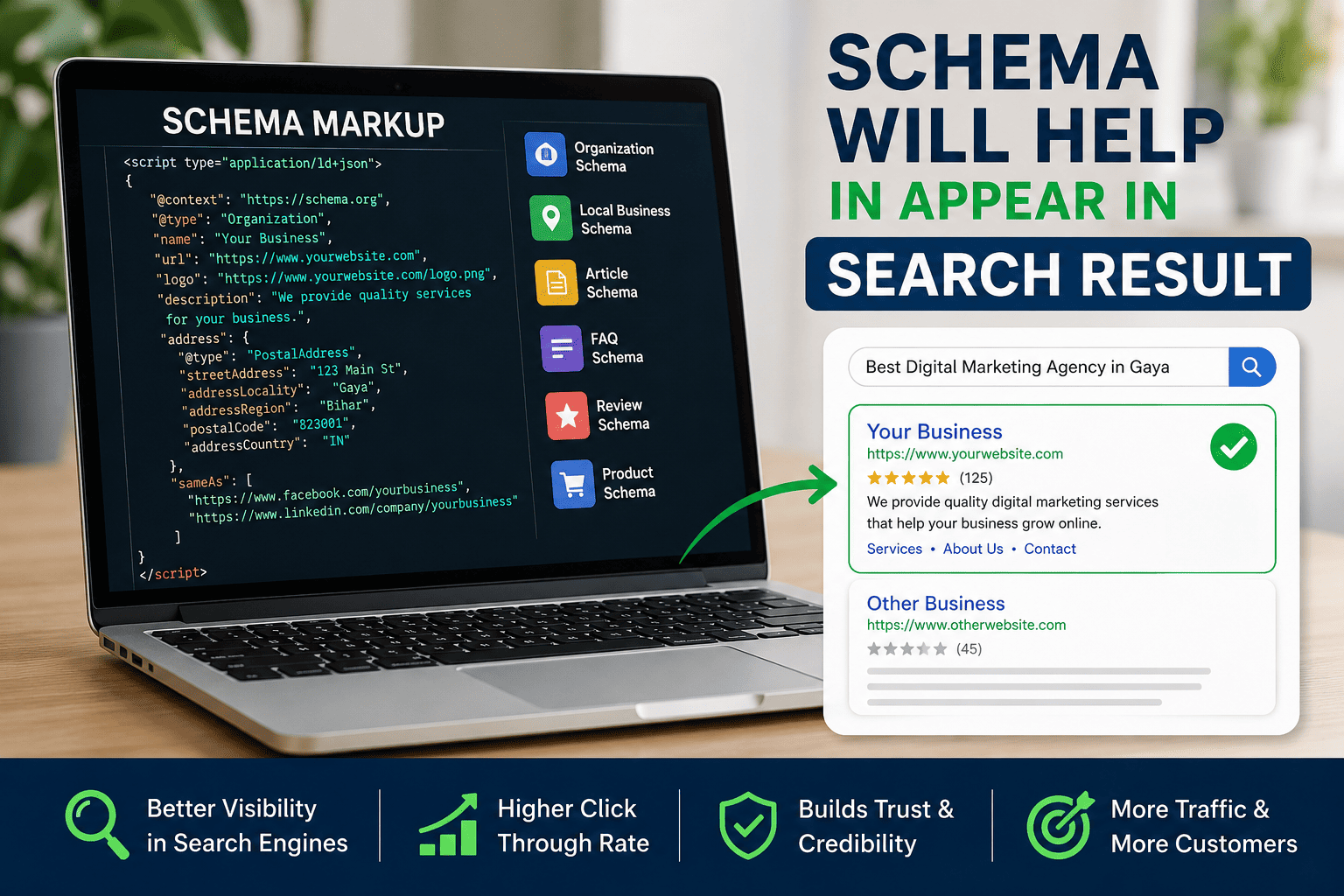
Local search engine optimisation is one area where small businesses can compete effectively.
Many customers search for businesses near them before making a purchase decision.
Examples include:
- Marketing agency in Gaya
- Accountant near me
- Photographer in Bihar
- Web design company near me
By optimising your website and online profiles for local searches, you can appear in front of customers actively looking for your services.
Important local SEO activities include:
- Optimising your Google Business Profile
- Collecting customer reviews
- Creating location-based website pages
- Using local keywords naturally
- Maintaining consistent business information online
A local business does not need to outrank global brands. It only needs to appear in front of relevant local customers.
Create Helpful Content
Content marketing allows small businesses to compete without spending large amounts on advertising.
When people search online, they usually have questions.
For example:
- How much does website development cost?
- What is digital marketing?
- How do Google Ads work?
- How can I generate more leads?
Businesses that answer these questions build trust before a customer contacts them.
Helpful content can include:
Blog Articles
Blog posts help attract search traffic and educate potential customers.
Videos
Video content often performs well on social media and search engines.
Guides
Detailed guides can demonstrate expertise and answer customer concerns.
FAQs
Frequently asked questions help users find information quickly.
Over time, content creates a valuable asset that continues generating traffic and leads.
Compete Through Expertise, Not Size
Customers rarely choose a business simply because it is large.
They choose businesses they trust.
A small company that demonstrates expertise can often outperform larger competitors.
Ways to showcase expertise include:
- Publishing educational content
- Sharing case studies
- Demonstrating industry knowledge
- Speaking at events
- Providing practical advice
When people see evidence of expertise, company size becomes less important.
Use Social Media Strategically
Many small businesses spend time on social media without a clear strategy.
The goal should not be collecting followers.
The goal should be attracting potential customers.
Choose platforms where your audience spends time.
For example:
Suitable for B2B businesses and professional services.
Useful for local businesses and community engagement.
Effective for visual industries such as photography, design, fashion, and hospitality.
YouTube
Excellent for educational content and long-term visibility.
Instead of posting constantly, focus on creating useful content that helps your audience.
Build Trust Through Reviews
Online reviews influence purchasing decisions significantly.
Many consumers read reviews before contacting a business.
Small businesses can compete effectively by building a strong reputation.
Encourage satisfied customers to leave reviews on:
- Industry directories
- Relevant platforms
Positive reviews provide social proof and help potential customers feel confident about choosing your business.
Responding professionally to reviews also demonstrates customer care.
Use Google Ads Carefully
Large companies may spend substantial amounts on advertising.
That does not mean small businesses cannot succeed with paid advertising.
The key is targeting.
Instead of trying to compete broadly, focus on:
- Specific services
- Local markets
- High-intent keywords
- Qualified audiences
For example, targeting “digital marketing agency in Gaya” may produce better results than targeting a broad term like “marketing”.
A smaller budget can still generate leads when campaigns are managed effectively.
Build An Email List
Many businesses rely entirely on social media platforms.
This creates risk because platform algorithms change regularly.
An email list gives you direct access to potential customers.
Ways to grow an email list include:
- Free guides
- Checklists
- Industry insights
- Newsletters
- Educational resources
Email marketing remains one of the most cost-effective methods for nurturing leads and maintaining customer relationships.
Highlight Your Personal Service
One area where small businesses often outperform larger organisations is customer service.
Large companies frequently use automated systems, long wait times, and multiple departments.
Small businesses can offer:
- Faster responses
- Direct communication
- Personal relationships
- Tailored solutions
Customers appreciate being treated as individuals.
Highlighting your customer service approach can become a major competitive advantage.
Showcase Customer Success Stories
Potential customers want proof that your business can deliver results.
Case studies and success stories provide that proof.
A strong case study should include:
- The customer’s challenge
- The solution provided
- The outcome achieved
Real examples help build credibility and reduce uncertainty.
Even simple success stories can influence purchasing decisions.
Build A Strong Brand
Branding is not just about logos and colours.
A brand is how people perceive your business.
Strong branding includes:
- Consistent messaging
- Clear positioning
- Professional presentation
- Reliable customer experience
Small businesses that develop a clear brand often stand out more effectively than larger competitors with generic messaging.
Be Visible Across Multiple Channels
Relying on a single source of traffic is risky.
Small businesses should aim to build visibility across multiple channels.
Examples include:
- Search engines
- Social media
- Email marketing
- Referrals
- Online directories
- Partnerships
Diversification helps reduce risk and create more opportunities for customer acquisition.
Monitor Performance Regularly
Many businesses invest in marketing without measuring results.
Tracking performance helps identify what works and what does not.
Important metrics include:
- Website traffic
- Lead generation
- Conversion rates
- Cost per lead
- Customer acquisition costs
Understanding these numbers allows businesses to improve continuously.
Even small improvements can produce significant long-term growth.
Use AI And Automation Wisely
Technology allows small businesses to operate more efficiently.
Tools can assist with:
- Content creation
- Customer support
- Email marketing
- Lead management
- Data analysis
Automation helps save time while maintaining consistency.
However, businesses should still prioritise genuine human communication when interacting with customers.
Work With The Right Marketing Partner
Many small business owners try to manage every aspect of marketing themselves.
While this can work initially, growth often requires specialised expertise.
A marketing partner can help with:
- SEO
- Paid advertising
- Website optimisation
- Content marketing
- Lead generation strategies
At Assurah Marketing Agency, we regularly work with businesses that want to compete more effectively online without needing the budget of a large corporation. The focus is not on outspending competitors but on creating smarter strategies that generate measurable results.
The right marketing approach can help small businesses attract qualified leads, improve visibility, and build long-term growth.
Consistency Matters More Than Size
Many small businesses assume success comes from having a large budget.
In reality, consistency often matters more.
Businesses that:
- Publish content regularly
- Improve their websites
- Collect reviews
- Engage with customers
- Optimise marketing campaigns
often outperform competitors that rely solely on brand recognition.
Online success is usually the result of repeated actions over time rather than one major campaign.
Final Thoughts
Small businesses can absolutely compete with larger companies online.
The internet has created opportunities that did not exist in the past. Customers now have access to countless options, and purchasing decisions are often based on trust, expertise, relevance, and customer experience rather than company size.
By focusing on a specific audience, creating useful content, improving visibility through SEO, building trust through reviews, and maintaining consistent marketing efforts, small businesses can establish a strong online presence.
Success online is not about having the biggest budget. It is about understanding your customers, communicating clearly, and delivering value consistently.
Businesses that focus on these fundamentals can compete effectively, whether they are serving customers in Gaya, across India, or anywhere in the world.