


Table Of Contents:-
- Introduction
- What Is Traditional SEO?
- What Is AI Search?
- How User Behaviour Is Changing
- SEO And AI Search Are Not The Same Thing
- How AI Platforms Choose Information
- Why SEO Still Matters In 2026
- Why AI Visibility Matters
- GEO: The New Layer Of Search Optimisation
- Local Businesses Face New Opportunities
- Content Is Becoming More Important Than Keywords Alone
- The Role Of E-E-A-T
- What Businesses Should Do Right Now
- How Marketing Agencies Are Adapting
- The Future Of Search
- Conclusion
Search is changing faster than many businesses expected.
For more than two decades, traditional search engine optimisation (SEO) has helped businesses improve their visibility on search engines such as Google. The goal was straightforward: rank higher, attract more visitors, and convert those visitors into customers.
However, 2026 has introduced a new challenge. People are no longer relying only on traditional search results. They are increasingly using AI-powered search platforms such as ChatGPT, Gemini, Perplexity, and Google’s AI-generated answers to find information, compare services, and make purchasing decisions.
Instead of clicking through ten blue links, users now receive direct answers generated by artificial intelligence. This shift is changing how businesses need to think about online visibility.
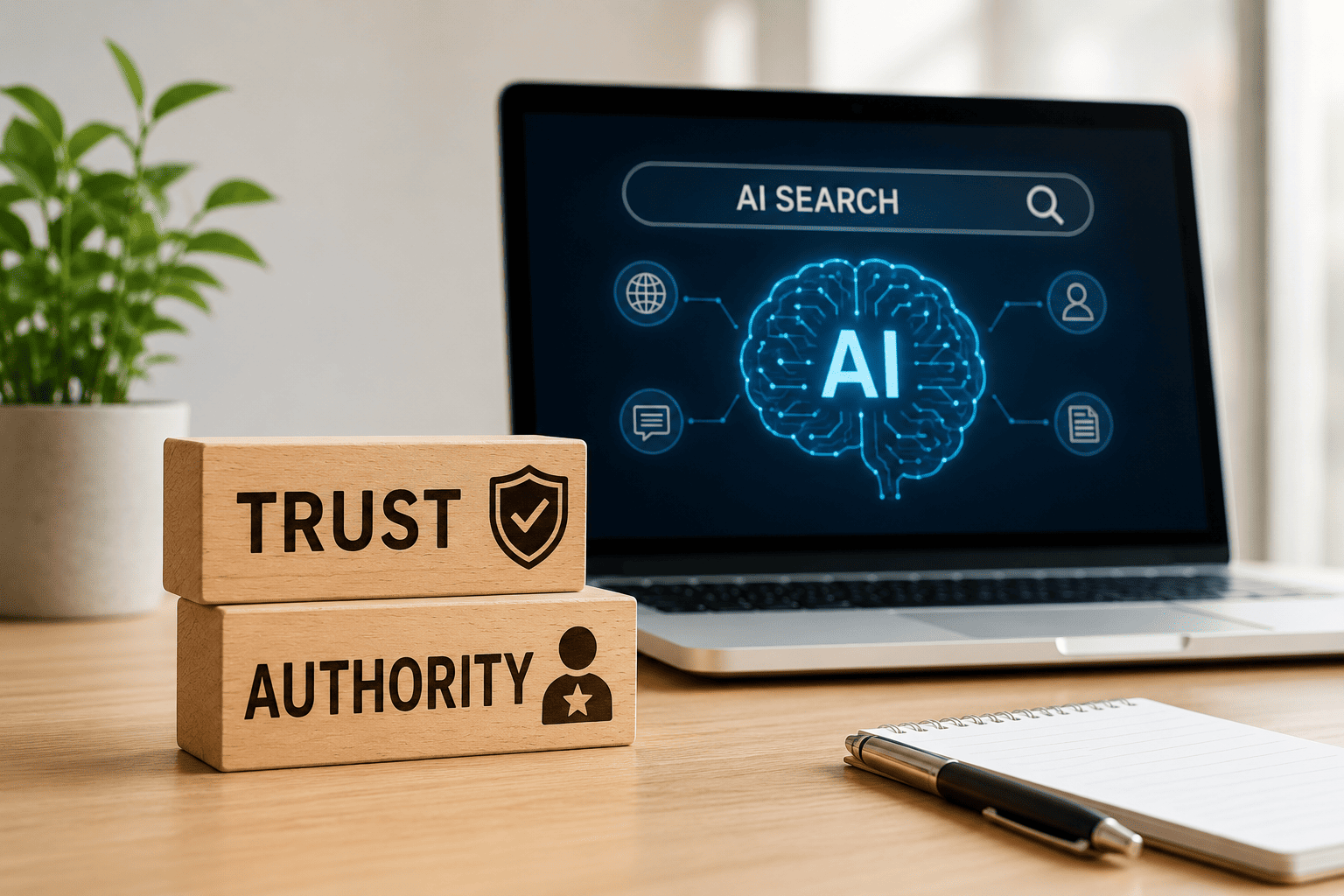
The question is no longer simply “How do we rank on Google?” It is now “How do we become a trusted source that AI platforms choose to reference?”
Understanding the difference between SEO and AI search is becoming essential for businesses that want to remain visible in the years ahead.
What Is Traditional SEO?
Search Engine Optimisation, commonly known as SEO, is the process of improving a website’s visibility in search engine results pages.
The objective is to rank for relevant keywords when potential customers search online.
For example, if someone searches for:
- Digital marketing agency in Gaya
- SEO services near me
- Best marketing company for small businesses
Google analyses thousands of websites and displays the pages it believes are most relevant.
Traditional SEO focuses on factors such as:
- Keyword optimisation
- Website structure
- Technical performance
- Backlinks
- User experience
- Mobile responsiveness
- Content quality
For many years, these elements formed the foundation of digital visibility.
SEO remains important in 2026, but it is no longer the entire picture.
Add Your Heading Text Here
Lorem ipsum dolor sit amet, consectetur adipiscing elit. Ut elit tellus, luctus nec ullamcorper mattis, pulvinar dapibus leo.
What Is AI Search?
AI search refers to search experiences powered by artificial intelligence.
Instead of displaying only a list of links, AI systems generate direct answers based on information gathered from multiple sources.
When someone asks:
“What is the best marketing strategy for a local business in 2026?”
An AI platform may provide a complete response without requiring the user to visit multiple websites.
Examples include:
- ChatGPT
- Google AI Overviews
- Gemini
- Perplexity
- Claude
- Microsoft Copilot
These platforms analyse content across the web and generate answers designed to save users time.
As a result, businesses must now consider not only how search engines rank websites but also how AI systems choose sources.
How User Behaviour Is Changing
The biggest reason businesses need to pay attention to AI search is changing user behaviour.
People increasingly prefer conversations over traditional searches.
Rather than typing:
“SEO agency Gaya”
Users may ask:
“Which marketing agency can help a local business increase online visibility in Gaya?”
This style of searching provides more context and allows AI platforms to generate detailed recommendations.
Many users also trust AI-generated summaries because they combine information from multiple sources into a single answer.
This means businesses must optimise not only for keywords but also for questions, topics, and expertise.
SEO And AI Search Are Not The Same Thing
One common misunderstanding is that AI search will completely replace SEO.
That is unlikely.
SEO and AI search have different goals and operate differently.
Traditional SEO focuses on ranking webpages.
AI search focuses on understanding information and generating useful responses.
A website might rank well on Google but rarely appear in AI-generated answers.
Likewise, a website with strong expertise and trusted content may be cited by AI systems even if it does not hold the number one Google position.
Businesses that understand both approaches will have a significant advantage.
How AI Platforms Choose Information
AI platforms do not randomly select sources.
Although each platform uses different methods, several common factors influence their decisions.
Content Quality
AI systems prefer content that clearly answers questions.
Pages that provide useful explanations often perform better than pages created solely for keyword rankings.
Authority
Established businesses, recognised experts, and trusted websites are more likely to be referenced.
Authority can come from:
- Industry experience
- Quality backlinks
- Positive mentions
- Consistent expertise
Accuracy
AI models attempt to prioritise accurate information.
Content supported by evidence, examples, and factual explanations often performs better.
Structured Information
Well-organised content is easier for AI systems to understand.
Clear headings, logical sections, and structured data help AI platforms interpret information more effectively.
Brand Presence
Businesses that are mentioned across multiple platforms often gain more visibility.
AI systems frequently identify patterns of trust across the web rather than relying on a single website.
Why AI Visibility Matters
AI visibility is becoming increasingly important because AI-generated answers influence customer decisions.
Imagine a business owner searching:
“Which marketing agency can help improve local visibility and AI search presence?”
If an AI platform mentions your company as a trusted option, that recommendation can carry significant weight.
Unlike traditional rankings, AI mentions often appear directly within the answer itself.
This creates a new form of digital visibility.
Businesses that adapt early may benefit from increased exposure while competitors continue focusing only on traditional rankings.
GEO: The New Layer Of Search Optimisation
A growing concept in 2026 is Generative Engine Optimisation (GEO).
GEO focuses on helping businesses appear in AI-generated responses.
While SEO targets search engines, GEO targets generative AI systems.
Some GEO practices include:
- Publishing comprehensive content
- Demonstrating expertise
- Using structured data
- Building authority across multiple platforms
- Creating content that answers specific questions
- Improving brand recognition
GEO is not a replacement for SEO.
Instead, it builds on traditional SEO principles.
Businesses that combine SEO and GEO often achieve stronger visibility across both search engines and AI platforms.
Local Businesses Face New Opportunities
AI search is creating interesting opportunities for local businesses.
Historically, local visibility depended heavily on Google rankings and business listings.
Today, AI platforms increasingly provide recommendations based on location, reputation, reviews, and expertise.
For example, someone searching:
“Who offers SEO services in Gaya?”
May receive recommendations generated from multiple online sources.
This means local businesses need a strong digital presence across the internet, not just on their own website.
Consistent information, positive reviews, and authoritative content are becoming more important than ever.
Content Is Becoming More Important Than Keywords Alone
Keywords remain valuable, but content quality has become even more important.
AI systems analyse context rather than focusing solely on exact keyword matches.
Businesses should create content that answers real customer questions.
Examples include:
How much does SEO cost?
Is Google Ads worth it?
How can a small business get more leads online?
What is AI search optimisation?
This type of content helps establish expertise and increases the likelihood of being referenced by AI systems.
The goal should be to educate, inform, and solve problems.
The Role Of E-E-A-T
Google continues to emphasise E-E-A-T:
- Experience
- Expertise
- Authoritativeness
- Trustworthiness
These principles are equally relevant for AI search.
Businesses that demonstrate genuine experience and expertise are more likely to gain visibility.
Ways to strengthen E-E-A-T include:
- Publishing expert content
- Sharing case studies
- Displaying testimonials
- Maintaining accurate business information
- Building a strong reputation
Trust is becoming one of the most valuable digital assets.
What Businesses Should Do Right Now
The transition towards AI search does not require businesses to abandon their current marketing strategies.
Instead, it requires adaptation.
Key actions include:
Continue Investing In SEO
Technical SEO, keyword research, and quality content remain important.
Create Helpful Content
Focus on solving customer problems rather than writing solely for search engines.
Strengthen Brand Authority
Build recognition across websites, directories, social platforms, and industry publications.
Use Structured Data
Schema markup helps search engines and AI systems understand content more effectively.
Improve Local Presence
Maintain accurate business information and encourage customer reviews.
Monitor AI Visibility
Track how often your brand appears in AI-generated responses.
How Marketing Agencies Are Adapting
Forward-thinking marketing agencies are already helping clients prepare for this shift.
Rather than focusing exclusively on rankings, agencies are now considering broader visibility strategies.
For example, Assurah Marketing Agency helps businesses understand both traditional SEO and emerging AI search opportunities.
This balanced approach allows businesses to improve their visibility in search results while also increasing their chances of being referenced by AI platforms.
As search behaviour evolves, businesses need strategies that address both current and future channels.
The Future Of Search
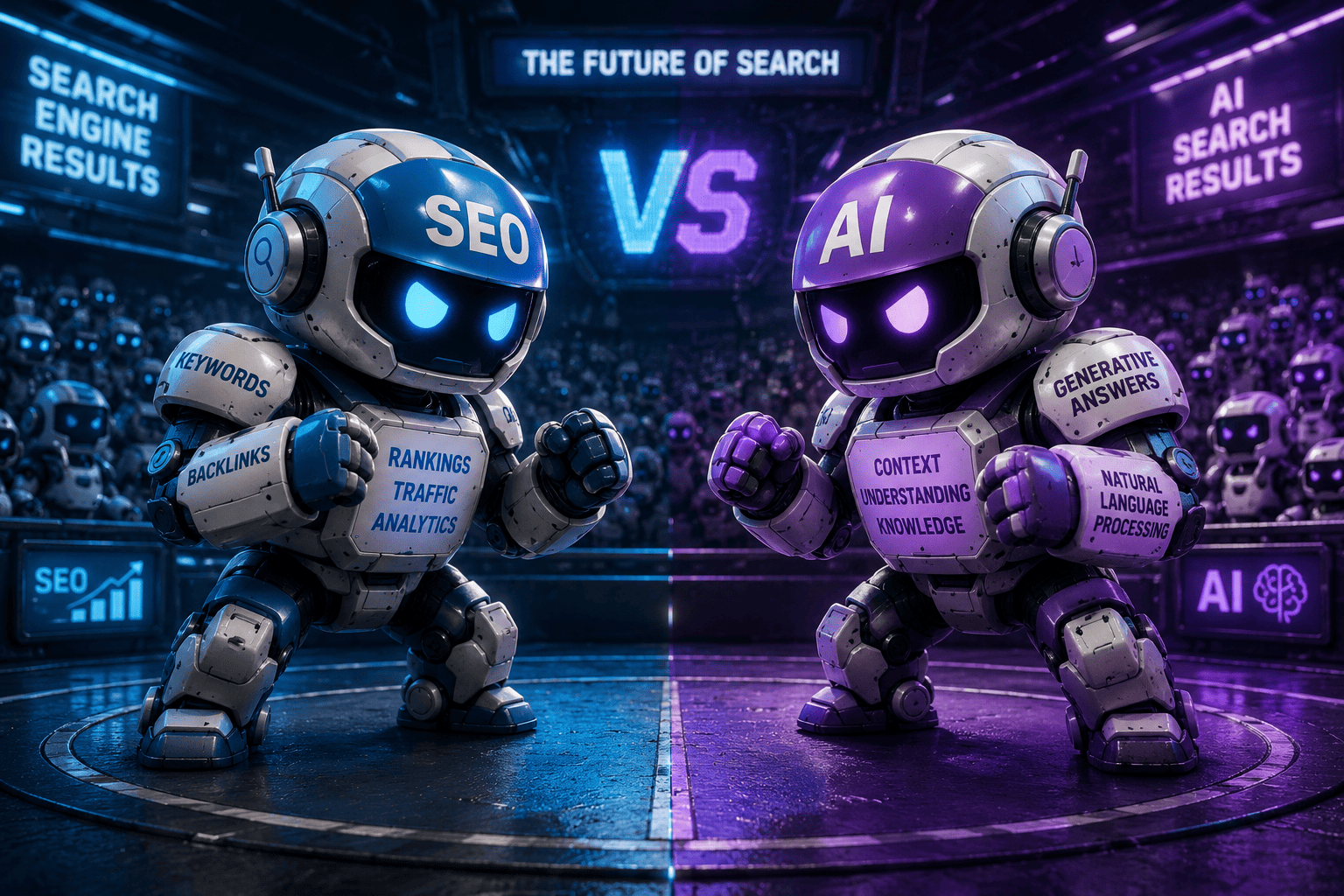
The future is unlikely to be a battle between SEO and AI search.
Instead, both will coexist.
Traditional search engines will continue delivering results for many queries.
AI platforms will continue generating direct answers for others.
Businesses that focus only on SEO may miss opportunities in AI-driven discovery.
Businesses that ignore SEO entirely may struggle to build the authority needed for AI visibility.
The strongest strategy combines both.
This means:
- Strong website foundations
- High-quality content
- Technical optimisation
- Brand authority
- Trust signals
- AI-friendly content structures
The companies that embrace this combined approach will be better positioned for long-term growth.
Conclusion
SEO is not disappearing in 2026, but it is evolving.
AI search is changing how people discover information, compare services, and choose businesses. As a result, visibility now extends beyond traditional rankings. Businesses must understand the relationship between SEO and AI search rather than viewing them as competing strategies. SEO helps websites become discoverable. AI search helps businesses become part of the conversation. Those that invest in quality content, authority, trust, and user-focused experiences will be in the strongest position moving forward. Whether your audience is in Gaya, elsewhere in India, or anywhere around the world, the goal remains the same: provide valuable information that people trust and that search systems can confidently recommend. The businesses that adapt today will be the ones most visible tomorrow.